
Recent developments have heightened economic concerns across the United States, with inflation rates climbing and international conflicts influencing market stability.
Inflation on the Rise
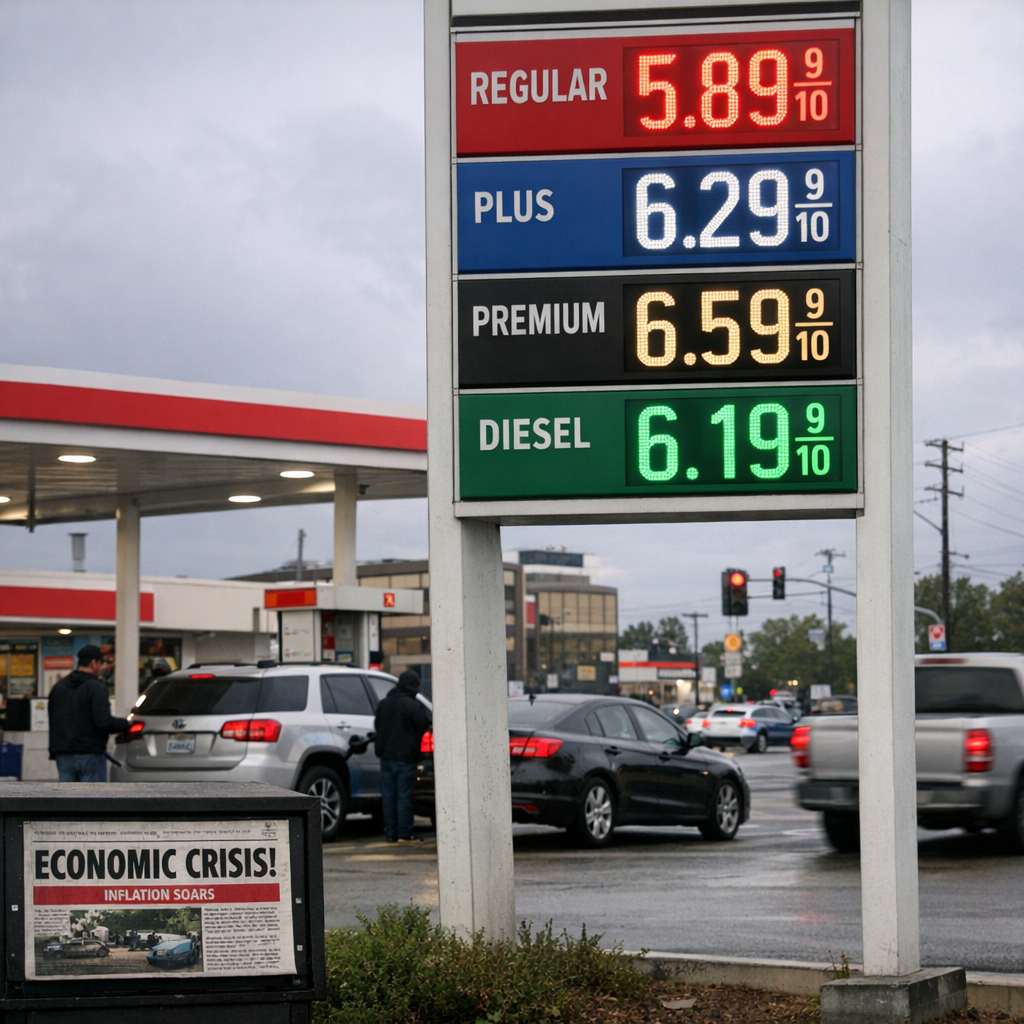
Consumer inflation has increased to 3.8% annually in April, with projections suggesting it may reach 4.2% in May. This uptick is attributed to ongoing geopolitical tensions and associated economic policies. Rising energy costs, including gasoline prices exceeding $4.50 per gallon in some areas, are placing additional strain on household budgets.
Impact on Consumer Confidence
Public sentiment reflects these economic challenges. A recent Gallup poll indicates that only 16% of voters believe the economy is performing well, while 75% feel conditions are deteriorating. This marks the lowest confidence level in three years. Additionally, a CBS News/YouGov survey found that 70% of Americans feel “angry” or “frustrated” about current economic policies, with only 11% expressing enthusiasm.
Global Conflicts and Economic Policies
The ongoing conflict with Iran has disrupted key oil supply routes, notably the Strait of Hormuz, contributing to the surge in energy prices. Concurrently, recent tariff implementations have added to the economic strain, with estimates suggesting an average annual cost of $1,500 per household.
Looking Ahead
As the nation approaches midterm elections, economic issues are at the forefront of public discourse. Policymakers face the challenge of addressing inflation and restoring consumer confidence amid complex global dynamics.