

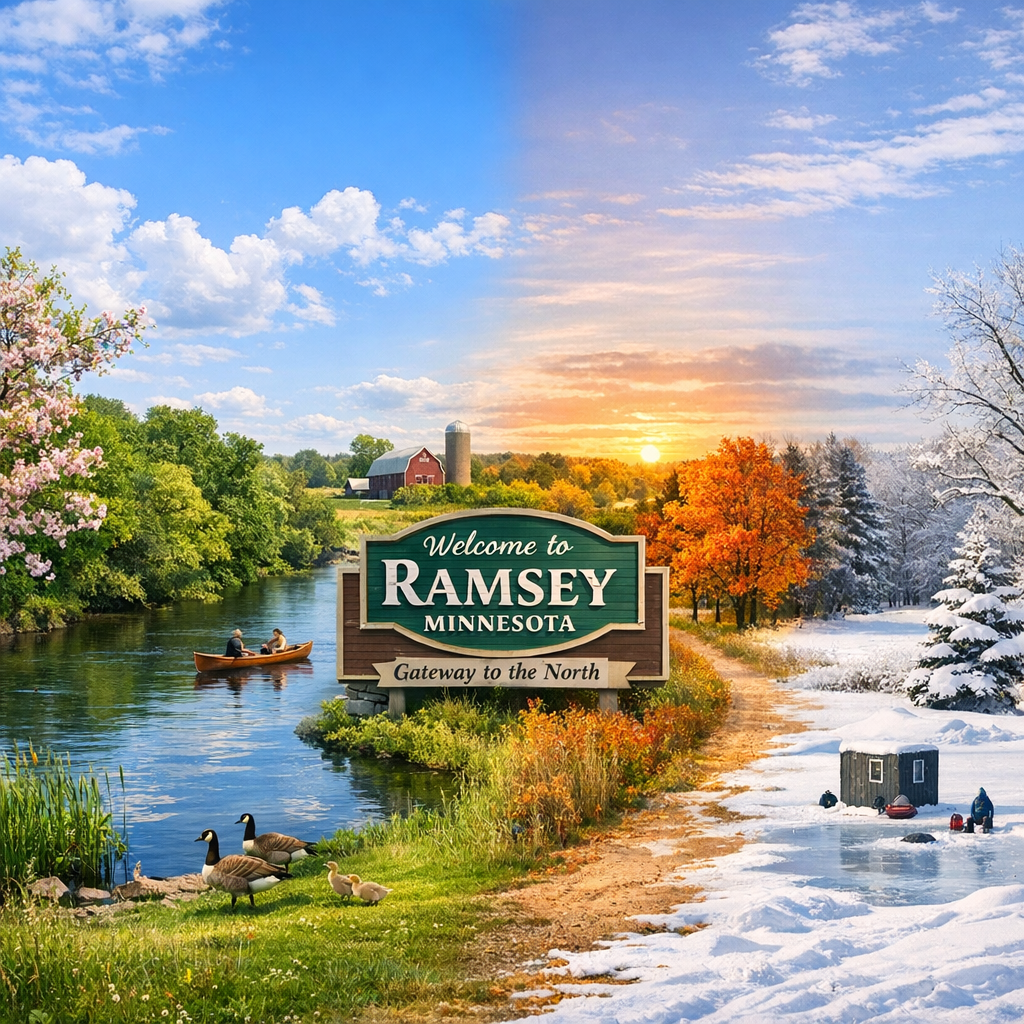
Ramsey, Minnesota, experiences a diverse climate characterized by distinct seasonal changes, each bringing unique weather patterns and environmental considerations. Understanding these patterns is essential for residents to prepare and adapt effectively.
Seasonal Weather Patterns
Winter
Winters in Ramsey are typically cold and snowy. January is the coldest month, with average high temperatures around 19.2°F (-7.1°C) and lows near 6.8°F (-14°C). Snowfall is common, contributing to the region’s winter landscape.
Spring
Spring brings a gradual warming trend. April sees average highs of 55.4°F (13°C) and lows of 33.4°F (1°C). This season also marks an increase in precipitation, averaging 2.92 inches, leading to budding flora and the return of wildlife.
Summer
Summers are warm and can be humid. July, the warmest month, averages highs of 82.6°F (28°C) and lows of 61.7°F (16°C). This period often experiences increased rainfall, with June averaging 4.54 inches, supporting lush vegetation.
Fall
Autumn features cooler temperatures and vibrant foliage. October averages highs of 57.5°F (14°C) and lows of 37.5°F (3°C), with precipitation around 2.72 inches, preparing the region for the upcoming winter.
Environmental Considerations
Water Conservation
Ramsey’s sandy soils have low water-holding capacity, causing rapid drainage. During summer, lawn watering can triple water usage to over five million gallons per day. As the population grows, this demand pressures the groundwater supply. Residents are encouraged to adopt water conservation practices to ensure sustainable water use.
Climate Change Impacts
Climate change is influencing local weather patterns, leading to more extreme weather events, including heavier rainfall and increased flooding risks. These changes can affect public health, infrastructure, and natural ecosystems. Ramsey County has developed a Climate Equity Action Plan to address these challenges and promote community resilience.
Natural Resource Management
Ramsey is home to valuable natural resources like the Mississippi and Rum Rivers, wetlands, and woodlands. The city emphasizes the importance of preserving these resources to maintain ecological balance and community well-being. Initiatives include managing shade tree diseases and promoting native plantings.
By understanding Ramsey’s climate and environmental factors, residents can make informed decisions to adapt to seasonal changes and contribute to the sustainability of the community’s natural resources.